Part cake, part pudding, this tender apple and pear upside-down cake is suffused with vanilla bean and the flavors of perfectly ripe apples and pears.
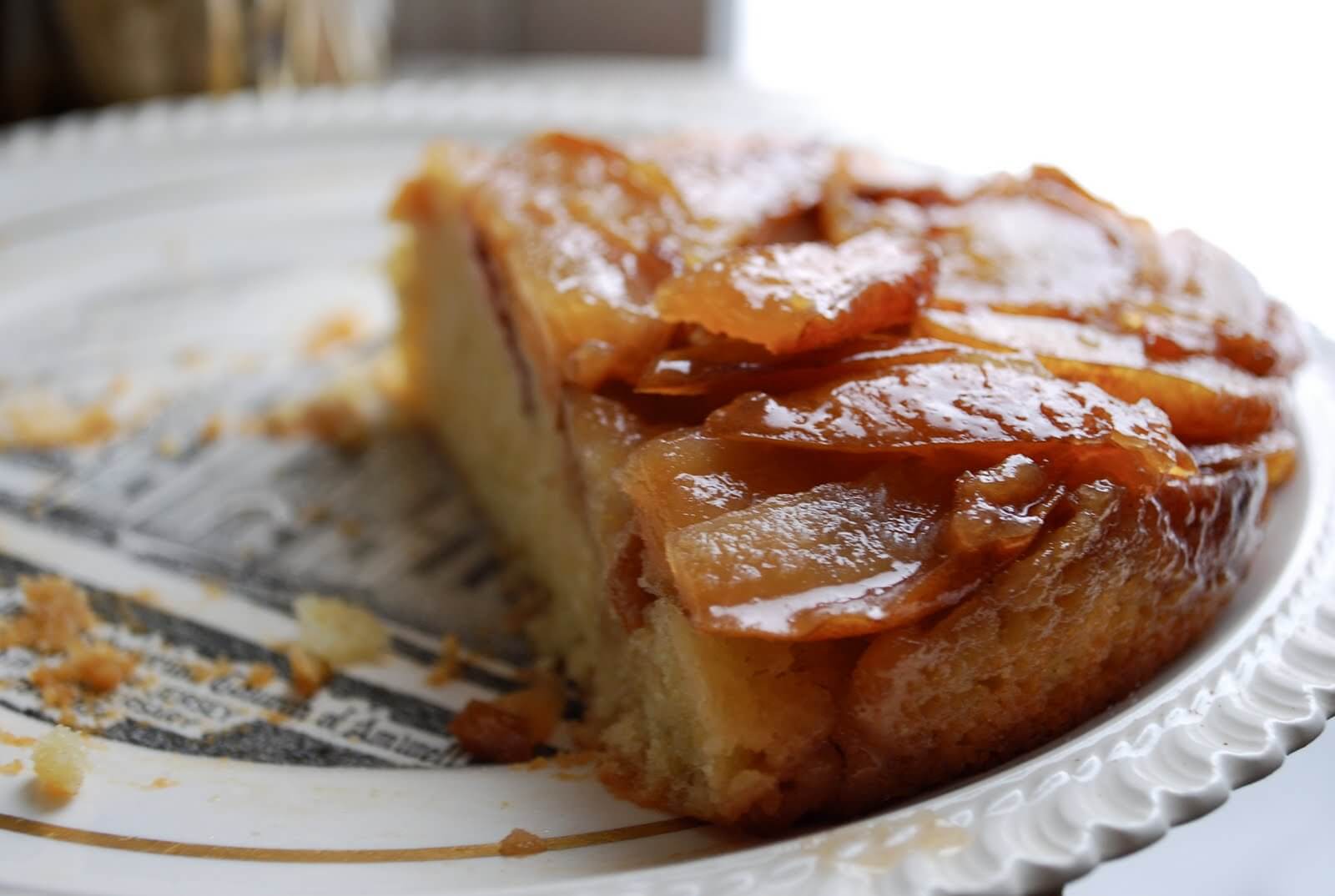
Part cake, part pudding, this tender apple and pear upside-down cake is suffused with vanilla bean and the flavors of perfectly ripe apples and pears.


This is a classic oatmeal cookie with crisp, lacy edges and a slightly cakey center. The oatmeal lends the wholesomeness, and the raisins bring the nostalgia. The right texture, and a hint of sophisticated flavor, make for a very satisfying cookie.
Spiced Oatmeal Cookies with Raisins (adapted from the Art of Simple Food by Alice Waters)
makes roughly 3 dozen cookies
1 1/2″ segment of ginger, peeled and sliced, plus 1 teaspoon finely minced
heaping 1/2 cup raisins
4 whole cloves
1/2 cup plus 1 teaspoon water
1 1/2 cups rolled oats (not quick cook)
1/2 cup all-purpose flour
1/2 -1 teaspoon salt
1/2 teaspoon freshly ground, or crushed, coriander seed
2 pinches ground cloves
2 dashes cinnamon
maybe a couple twists of pepper
1 stick unsalted, slightly soft, butter
6 tablespoons granulated sugar
6 tablespoons dark brown sugar
1 teaspoon baking soda
1 egg (preferably room temperature)
1 teaspoon vanilla extract
In a small saucepan combine 1/2 cup water, the raisins, coriander, cloves, and ginger slices; bring everything to a boil and set aside to steep for 20 minutes.
Preheat your oven to 375 degrees. Line two heavy duty baking sheets with parchment.
Assemble the dry ingredients. Grind the oats in a food processor–a few pulses should do it. In a medium bowl, whisk together the ground oats, flour, cinnamon, and cloves, and then set aside.
In a large bowl, cream the butter with beaters, or, if using a stand mixer, with the paddle attachment. Beat on a low speed until the butter is fluffy and creamy. Then add the sugars, and beat again until the mixture is fluffy and light. Toss in the teaspoon minced fresh ginger. Combine 1 teaspoon boiling water and 1 teaspoon baking soda in a small bowl, and then add the the butter mixture. Beat in the egg just until combined. Remove the ginger slices and cloves from the steeping raisins, and strain out any water. Fold into the butter mixture. Slowly add the flour, beating until just combined.
Drop in 1″ balls onto the prepared baking sheets and bake for 8-10 minutes, rotating baking sheets halfway through. Remove from oven and cool for 10 minutes, then remove to a plate, or wrap up.
 It stands to reason that if you have a waffle iron, you probably also know how to make waffles. Or at least you know how to find a waffle recipe. But, I made waffles so that’s what I’m blogging about. As Brian frequently points out, the origins of waffle irons are mysterious. Why create a device so elaborate for a food you’ve never had?
The word origin of waffle is related to wafer, and a waffle is essentially a leavened wafer. In order to cook wafers, one had to press the thin batter between two irons and then stick it into the fire, or a coal bucket, to cook. So, if you’re pressing the wafer anyway, you might as well make a design, and then you realize that texture makes things taste better, and then you add the leavening, and then you realize how perfect the basket pattern is for holding syrup, or, in this case, apple compote and syrup.
Ivan Day’s site historicalfood.com has detailed information about the history of waffles and wafers. It’s a pretty cool site. Once Brian sees it, he’s going to want make every recipe featured–he is always threatening to make figgy pudding and stuff like that. The following recipe for a dutch style wafer, or waffle, is from 1724, and I am taken with the simplicity as much as the butter content.
The Right Dutch-Wafer (from Ivan Day’s historicalfood.com)
Take four Eggs, and beat them very well, then take a good Spoonful of a Pint of fine Sugar, one nutmeg grated, Cream, and a Pound of Flower, a Pound of butter melted, two or three Spoonfuls of Rose-water, and two good Spoonfuls of Yeast; mix all, well together, and bake them in your Wafer-tongs on the Fire. For the Sauce, take grated Cinnamon, Sack, and melted Butter, sweeten’d to your Taste.
From Mary Kettilby, A Collection of Above Three Hundred Receipts (London: 1724).

Since you probably don’t have wafer tongs, allow me to offer a more contemporary recipe, served with a bit of fresh apple compote and maple syrup.
Easy Waffles (adapted from How to Cook Everything by Mark Bittman)
serves four or five
2 cups all-purpose flour
3 teaspoons baking powder
2 teaspoons sugar (more for a sweet waffle)
1/2 teaspoon salt
1 1/2 cups plus 2 tablespoons whole milk
2 eggs
4 tablespoons butter, melted and then set aside
1 teaspoon or so vanilla
Preheat your waffle iron. Combine the dry ingredients. In a separate bowl, combine the milk and eggs, beating them together a little bit; then add the butter and vanilla. Stir the wet ingredients into the dry, and stir until just combined. The batter should be a touch drippy, so add a little more milk if you need it.
Brush a neutral oil on the waffle iron, and ladle in a 1/4 cup of batter at a time. The waffles are going to get much bigger, so don’t overdo it. If you have an electric waffle iron like mine, the light will change from red to green when the waffles are almost done. I keep a close eye and tend to pull them when they’re golden, and the slightest bit crispy. Keep the waffles in a warm oven until you are ready to serve them. If you are totally classy, throw your plates in the oven too.
Quick Apple Compote
an amount of apples, sliced
1/4 cup sugar
2 tablespoons lemon or orange juice
1 teaspoon of lemon or orange zest
spices of choice
pinch of salt
honey
While you are cooking the waffles, combine all, or some, of the ingredients above, and cook on medium heat until the apples are falling apart and bubbly.
Serve the waffles with a ladleful of compote, and a drizzle of real maple syrup.

I have a complicated relationship with red cabbage. On the one hand, it grosses me out. On the other hand, I love it. One time I ate a falafel that had red cabbage in it and it mixed with the tahini and there was this lavender liquid oozing out of the pita and it grossed me out so much that it was a long time before I could eat falafel again. Kind of like when you get sick after you eat something and then you can’t eat it again, only I didn’t actually get sick, it just makes me sick to think of lavender tahini. Disgusting.
On the other hand, I love German food and I especially love German food in the fall, which means I love braised red cabbage and apples. There’s not really a whole lot of difference taste and texture-wise between red cabbage and green cabbage, but I think for this dish, red cabbage looks a lot more appetizing. The pale flesh of the apples against the white cabbage, just looks bland. With the red cabbage, the apples will take on a little fall color. When you cook with red cabbage it’s really important to use an acid (in this case vinegar) or it will turn blue (which is kind of cool because there aren’t a lot of blue foods, but it would probably turn most people off).
Braised Red Cabbage with Apples (adapted from Mark Bittman’s Best Recipes in the World)
makes a dutch oven full of cabbage
One medium sized red cabbage, diced
2 apples, peeled, cored, and chopped
6 tbs. butter! (The original recipe called for 8 and even I couldn’t bring myself to do it.)
3 tbs. apple cider vinegar (or white or red wine vinegar)
2 tbs. sugar
2 big spoonfuls apple butter (or a sweet jelly)
salt
pepper
In a large, heavy-bottomed pot, melt the butter. Add the vinegar, sugar, salt, and pepper.
Dump in the cabbage and stir. Let it go for a few minutes until it starts to get soft.
Turn the heat to low and add the apples and apple butter. Give it a stir and put the lid on it.
Cook for 45 minutes-1 hour. Check every once in a while and if it seems like it’s getting dry in there, add just a little bit of water.

 At Brooklyn Supper, we make an effort to keep things local and organic, but we try not to go crazy about it. Sometimes you need a banana or a lemon. Or sugar or coffee. And around mid-March, you think you’re going to go crazy if you eat another root vegetable. But when we have a choice, we like to get things at the farmers’ market or one of the local butchers, which I know comes off to some people as something snobby and even silly.
The topic of food snobbery came up at Thanksgiving. One of our many fantastic guests was our friend Patrick who owns the Hamdingers cart (check it out if you’re ever in Charlottesville, Va.) which focuses on local, organic street food. Patrick was saying that a lot of times people come up to the cart and ask what’s with all the organic food and why doesn’t he just sell “normal food,” which got us to talking about what “normal food” is.
It’s a weird thing that a fast food burger, full of hormones and cows who were fed cows, served on a bun with all kinds of weird ingredients is normal, but the kind of food that almost everyone ate for centuries is some kind of fancy-pants thing. But that’s how it is, so this Thanksgiving, we put on our loosest-fitting fancy pants and dug in.
To begin, we had fresh apple butter (made by our youngest guest), goat cheese, pate that Patrick picked up at Marlow and Daughters, and brie. Then we moved on to home-made pickles–kohlrabi, grape, and carrot. We also had grape salsa with brie on crostini. Then we sat down for soup, an amazing turkey, and a rainbow of sides. And finally, we ended with fresh pumpkin pie and real ginger ice cream.
The bird was perfect. When I ordered it, the butcher thought they would top out at 16 lbs., so I put on my request form that I wanted the biggest one I could get. I ended up with a 21 lb. bird that we could barely get into the oven, but that was ok since we had a little help from our wonderful neighbors, and a large toaster oven. Our hearts were certainly warmed by the company (mostly old friends, and some new ones), which was good because the turkey cooked a lot faster than expected and was lukewarm by the time we sat down. But it was alright, gravy fixes everything, we had each other, and all the dishes our friends brought- squash soup, potato gratin, roasted root vegetables, stuffing, and green salad- were fantastic. It was really, really great to share such a delicious meal with so many dear friends, and the potluck atmosphere was just right for the evening.
We had a long, borrowed table set up diagonally to fit in the room, and with a couple of tablecloths and candles it was just right. By the end of the evening, we even had a father and son passed out on the sofa with the football game on.
p.s. Why don’t we eat gravy more often? Expect to see a lot more dishes with gravy on Brooklyn Supper in the coming year.
 (Toast with gravy the morning after–sublime)


